Your Questions, Answered
Your Questions, Answered
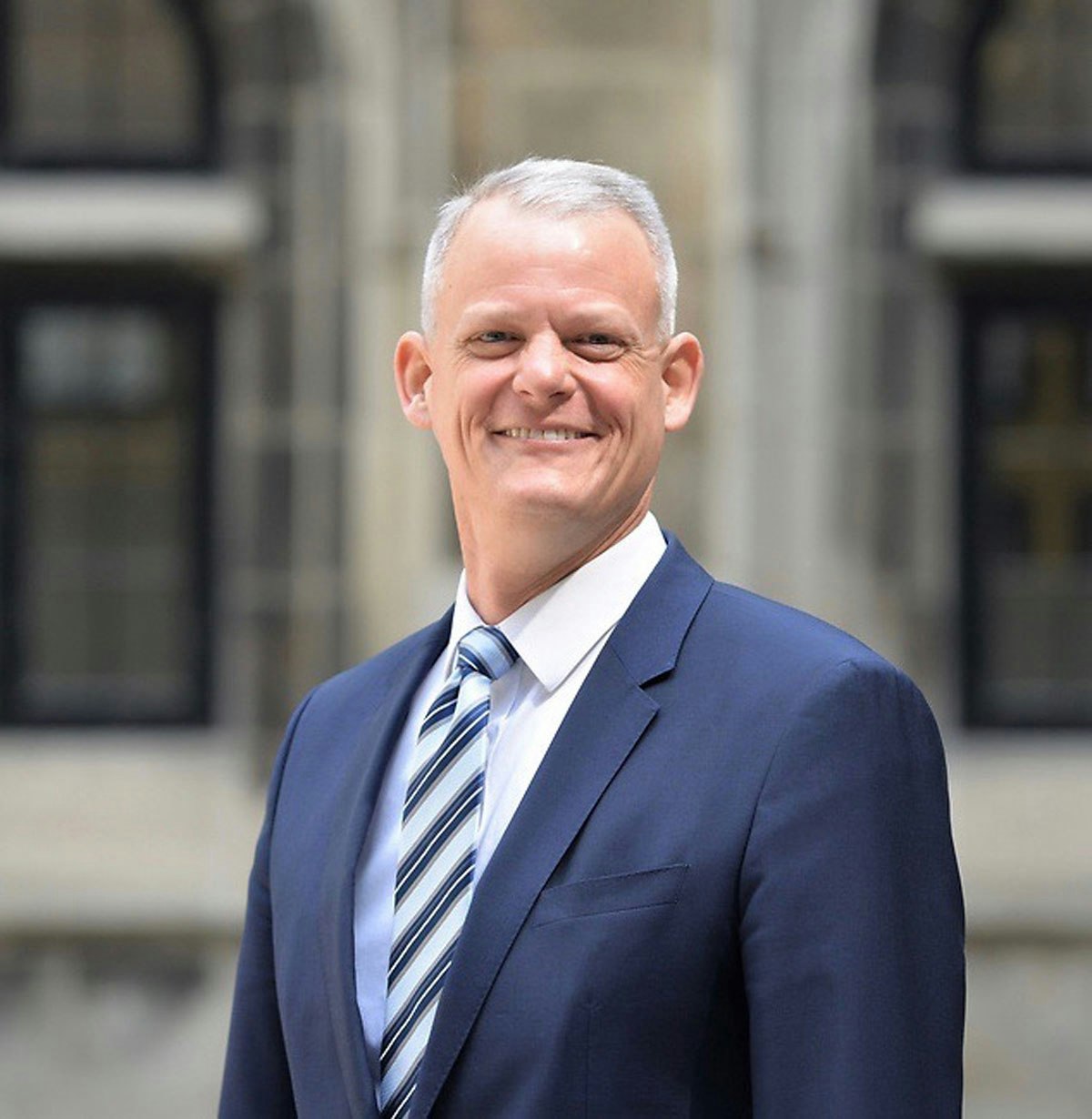
Below, you’ll find links to full candidate questionnaires from community groups across the district, along with highlights of Phil’s responses, so you can see exactly where he stands.
Your Questions, Answered
Below, you’ll find links to full candidate questionnaires from community groups across the district, along with highlights of Phil’s responses, so you can see exactly where he stands.
Topics covered: economy, ICE, China, democracy, federal funding, local priority, why Phil is the best candidate for this office
What is the most important issue in your district, and how would you address it legislatively?
Instability, both political and economic, is the most pressing problem in our community. Families feel less safe as costs rise and government systems feel unreliable. Distrust in politics, rapid technological change, and constant disruption in governance leave people uncertain about their futures. There is a pervasive anxiety that the ground is shifting faster than people can adapt.
Lower-income households and retirees worry about access to health care and whether the government will function reliably. Middle- and upper-income families are squeezed by rising costs and taxes. Younger workers and recent graduates are trying to plan their futures in an economy where even traditionally stable entry-level jobs feel uncertain. People are living on high alert.
A president making unilateral foreign policy decisions without follow-through, using tariffs without congressional approval, and prioritizing enforcement over comprehensive immigration reform leads to communities feeling unsafe. ICE agents operating without proper background screening, training, transparency, or accountability challenge accepted legal frameworks, creating real — even deadly — consequences for families and neighborhoods.
If elected, my first priority will be to assemble a team of principled leaders to demand accountability at every level of government —starting with the Department of Justice and FBI — and restore the independence of inspectors general.
I will leverage my experience as an FBI hostage negotiator to bring people together across divides and deliver results. At the same time, I will build bipartisan coalitions to deliver durable federal reforms to prevent gun violence. Protecting children and families requires evidence-based action, not slogans.
To address economic instability, I will fight for policies that create sustainable growth while supporting small businesses and innovation. That includes expanding workforce development through partnerships with universities, hospitals, and manufacturers in clean energy, health care, and transit. In IL-09, we can better connect research hubs like Northwestern and Discovery Partners Institute to job pipelines leading to family-sustaining careers, while expanding affordable housing near transit. Lowering costs requires restoring fairness and predictability to the economy. I will crack down on price-gouging, strengthen supply chains, and ensure competition works for consumers.
On health care, I support expanding coverage through a public option — capping out-of-pocket costs, empowering Medicare to negotiate drug prices, and reining in pharmaceutical profiteering.
Finally, Congress must reclaim its constitutional role by reasserting the power of the purse, conducting rigorous oversight, and setting executive overreach. When major trade actions, military deployments, and emergency powers bypass Congress, they create political uncertainty and economic instability that families and small businesses in Illinois’ 9th District feel directly through higher costs, disrupted supply chains, and unpredictable federal support for local institutions.
These guardrails are not partisan — they are essential to restoring stability and trust in our district. I have spent my career navigating crises where trust, clarity, and accountability were non-negotiable. In Congress, I will bring that same discipline and urgency to rebuilding a government that works for everyone.
Topics covered: Phil's top issues, democracy, foreign policy, Trump administration, immigration, healthcare, Israel and Palestine
What is your top issue and how do you propose to address it?
We are a nation divided and reeling from extremes. Our democracy and the independent institutions relied on to protect it are under attack and people don’t trust politicians to lead toward meaningful solutions leaving us weak and vulnerable.
The issues of safety and affordability are intertwined with trust. I hear from parents concerned about how their adult kids will be able to buy a house, how their own aging parents stretch savings against rising healthcare costs, and how they worry about their own ability to balance the rising costs of groceries, childcare, insurance, and transportation.
These aren’t separate crises, they're symptoms of a Congress and economy that isn’t working for most Americans. They stem from a president who makes unilateral foreign-policy decisions without a follow-through strategy and uses tariffs without congressional approval, driving up consumer costs and creating uncertainty for businesses. The President's border approach prioritizes enforcement over comprehensive immigration reform and leads to deadly results in our communities. ICE Agents operate behind masks, without transparency or accountability, and are challenging accepted legal frameworks.
And we have an ineffective Congress that puts personal gain, election politics, and parties over people and solutions. The majority strives to keep its narrow hold and lacks the courage to challenge the President.
This unhealthy system leads to distrust in our government and institutions.
The FBI has shown me how institutions can protect or fail people. If elected, my first priority will be to assemble a team of principled leaders—especially in what is expected to be one of the largest new Congressional classes—to align on how to demand accountability at every level of government, starting with the Department of Justice and FBI, and restoring the independence of Inspectors General. I’ll leverage my experience as an FBI hostage negotiator, where I resolved problems under extreme pressure, to bring people together across divides and deliver results. At the same time, I will immediately begin building bipartisan coalitions to enact real, federal-level reforms to prevent gun violence, protecting our children and communities from the tragedies I’ve spent my life confronting firsthand, and which the majority of our country demands.
Topics covered: most pressing issue facing our district, how Phil differs from other candidates, tax cuts, funding for schools, cost of living, healthcare, housing, redistricting in a non-census year, the Epstein files, immigration, the SAFE-T Act, the TRUST Act, the Trump administration, principled leadership
Do you support the Trump administration’s immigration enforcement in the Chicago area and beyond? Why or why not? If not, what changes do you think should be made?
No. I support strong border security and lawful immigration enforcement — but what we are seeing now undermines both constitutional rights and real public safety.
Practices that rely on fear, civil rights violations, and non-judicial warrants erode trust between law enforcement and communities. Public safety is best achieved through coordinated efforts among federal, state, and local agencies working together to build trust with communities so people feel safe reporting crimes and cooperating with law enforcement.
In Congress, I will push for aggressive oversight, restoration of judicial warrant requirements, mandatory inspections, de-escalation training, and independent accountability mechanisms. Public safety must be rooted in trust, professionalism, constitutional protections, and coordinated law enforcement — not political intimidation.
Topics covered: top three legislative priorities, economic security, congressional oversight, community safety, federal funding priorities, district concerns vs. party priorities, restoring congressional authority, U.S. intervention, congressional oversight, DOGE, working across the aisle, term limits, immigration, Social Security, healthcare, RFK Jr., AI regulation, impeaching Donald Trump, home ownership, SNAP benefits, U.S. trade policy
What should Congress do to address healthcare affordability?
People everywhere struggle to keep up with rising prices and health care is at the center of many of these conversations. Since 2000, premiums and deductibles have far outpaced wages. No family should fall into debt or face bankruptcy due to medical bills. Americans deserve quality, affordable healthcare and the government must play a fundamental role in assuring care.
I support the Affordable Care Act because it expands access and provides basic healthcare protections for millions of Americans. In 2025, roughly 26,000 people in the Ninth Congressional District received tax credits to help them pay for coverage through the ACA.
Its coverage provides predictability and flexibility for the present gig economy where people are juggling multiple jobs, freelancing, taking on creator roles and entrepreneurial pursuits. And, the ACA is vital for people who are “right sized”, or time out on prohibitively expensive COBRA options as they job-search. This is especially true for older workers who do not yet qualify for Medicare.
In Congress, I will work to protect and improve the ACA by:
Preserving and stabilizing tax credits that cap ACA premiums
Drive greater efficiency, transparency, and competition throughout the health care system, including the drug supply chain with Pharmacy Benefit Management companies and drug manufacturers
Increase enforcement of the No Surprises Act, a gap that needs closing so patients do not receive charges for emergency ambulance transportation
Reform the practices of aggressive debt collection that can block families from obtaining stable housing and increases the risk into financial instability
Topics covered: why Phil is running, Phil's most pressing issue, Phil's plans for IL-09, immigration, healthcare, tax policy, congressional oversight, foreign policy, AI regulation, The Democratic Party
Is the House currently using its oversight powers in the way it should be? What areas of government need more or less oversight?
Oversight is supposed to protect the public, not score political points. Over the past year, congressional energy has been consumed by partisan disputes while far less attention has gone toward holding powerful interests accountable. This Congress has been one of the least productive in decades, passing fewer bills than almost any session in the last 50 years. So no, the House is not using its oversight powers the way it should be.
Meanwhile, we’re seeing a dangerous pattern: unilateral executive actions without congressional authorization, the misuse of tariffs that raise costs for families, and the deliberate dismantling of accountability: firing Inspectors General, purging career prosecutors and FBI officials, and sidelining civil servants who upheld the rule of law. As a former FBI special agent, I’ve seen firsthand what happens when accountability structures are dismantled. I also know what it takes to rebuild them. The House must reclaim its constitutional authority, starting with reasserting its power of the purse.
Effective oversight should focus on how federal policy affects working families:
Holding Big Pharma accountable for skyrocketing prescription prices.
Ensuring infrastructure and relief funds reach communities equitably.
Scrutinizing corporate consolidation that drives up costs.
Protecting Social Security, Medicare, and affordable healthcare.
Following dark money in politics and demanding transparency.
Oversight should not be weaponized to intimidate public servants doing their jobs. Endless investigations into settled matters waste taxpayer dollars and distract from urgent issues.
Real oversight is about results, and results are what I will bring to Congress.